

GOD’S SLOW HORSES
Jesus’ appeal to the outsider in the Gospels – heterodox Samaritans, Roman collaborators, women compelled to sell their bodies, disabled people, the mentally and spiritually disturbed – made a big impact on the early Church. Jesus had an unhappy relationship with Jerusalem, where the ancient world’s metropolitan elite gathered, and seemed to prefer the left behind northern towns and villages. This preference can be overstated, but Jesus clearly had a pronounced concern for the disenfranchised.
It is something St Paul picks up on in his first letter to the Corinthians:
Consider your own call, brothers and sisters: not many of you were wise by human standards, not many were powerful, not many were of noble birth.
It’s significant that Paul does not talk about sin holding people back at this point. In other places he writes about the universality of sin, and how God overcomes this by the cross and resurrection to create new people. The grading of the sin of others was of little interest to Paul, which is not surprising given he saw himself as the chief of sinners. It was axiomatic for him that God takes sinners into his service; that’s the whole point of the Gospel.
In 1 Corinthians 1, he talks instead about the social background of the people following Jesus. Most were not smart or well-connected or upper class, which meant they were not moneyed either. These personal profiles would have burned into their psyche because that’s what upbringing does for us. Paul knew many would feel they had little to contribute to the world, especially one as rigidly hierarchical as Rome’s. Without citizenship in the Roman world, you were nothing; even with citizenship, there was a stark class system. Those Christians without influence must have wondered how they were to change the world with this Gospel, but in his letter, Paul basically says: the Gospel isn’t about wealth, class or power and is designed to wrongfoot those who smugly think they have all the answers because they have all the privileges.
And this plays out in interesting ways in our world. There are cohorts of people who have been historically disenfranchised in both the Church and the world, often based on gender, race, sexuality and disability. Listening to the stories of people who have been made to feel like they don’t belong is critical in the quest to form a church in the image of 1 Corinthians, especially as the church is supposed to reflect the kingdom of God. And there are other ways people can feel outsiders in the spirit of 1 Corinthians.
Consider your own call, brothers and sisters. Some of you have dyslexia or dyspraxia. Some of you have ADHD or are on the spectrum. Others of you struggle with education or do not feel articulate in a group. Some of you live with depression or anxiety, others with panic disorders. Some of you live with chronic pain or dementia. Others grew up in poverty and always remember this. Some of you have experienced domestic violence or abuse. Others are shy or struggle to make friends.
The list could go on, and you could add to it from your own experience, no doubt. It may explain why almost everyone says they feel imposter syndrome in role. That somehow they are not fitted for the task and it will only be a matter of time before other people see through them. It is something about human makeup. We all carry insecurities and even though other people are unaware of our insecurities, they affect how we are with them. It leads us to a strange place where, even within a body like the Church, lots of people feel they are outsiders, not belonging as much as others.
And here is St Paul, in 1 Corinthians, speaking right into our imposter syndrome. God has called each of us in full knowledge of who we are. He has our CV, he knows it inside out, far better than we do: even before a word is on my tongue, O Lord, you know it completely, says the Psalm. He wants us to harness any sense we have of not belonging, because the world is full of people who feel they are on the outside, looking in. The Gospel was made for such people, for the strange sense of not belonging ultimately comes from our alienation from God, not realising he is waiting to welcome us back like the father of the prodigal son.
The problem for us starts when we stop seeing ourselves like the prodigal son and start to inhabit the role of the older brother. When the prodigal comes to his senses in the far away country, he decides to say to his father: I am no longer worthy to be called your son, treat me like one of your hired hands. The tragedy of the parable is that this is exactly how the older brother feels about his life. All that the father has is his to enjoy, but he won’t allow himself the privileges, giving him a permanent sense of being on the outside when he is actually the older son and heir of the family. We should guard against this. If we continue to act like people who are alienated and on the outside, without good reason, other people who do not believe what we believe will see it and draw their own conclusions.
God loves our sheer ordinariness, which is counter-cultural. It is the exceptional who get noticed in our world, but here is God, in his alternative history of the world, shaking it all up and turning the spotlight on ordinary people and ordinary places, defying the ‘can anything good come out of Nazareth?’ line that has us sniggering about boring provincial towns. And there is something deeper still, because Paul says: God chose what is low and despised in the world, things that are not, to reduce to nothing things that are. It reverberates with the tune of the Magnificat, where Mary says: he has brought down the powerful from their thrones, and lifted up the lowly. It suggests that, in our ordinariness and imposter syndrome, in our fallibility and our diagnoses, we are the vehicle for Mary’s song. That we will play our part in turning the world upside down until the pieces fall in a different shape in the new creation.
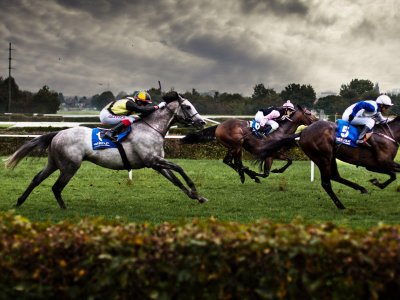
Mick Herron has written a series of classic spy novels, dramatised on Apple TV, where spies who have failed the grade at MI5 are re-located to an anonymous, dilapidated office above a shop in an unglamorous corner of London. The failed spies are called, in the pitiless jargon of the trade, slow horses. And yet somehow they end up being the most important players in national emergencies. I think it’s fair to say that God choses slow horses as well. St Paul might have called them slow chariots in his day, but the message is the same: ordinary people who do extraordinary things because there is an extraordinary power at work in them.
POPULAR ARTICLES

God In The Cow Shed
2020 has been dominated by the C word. Not that C word. I mean conspiracy theory involve space. Some people believe the
Viral With The Holy Spirit
Since the tech revolution, insurgent new start-ups have enjoyed using the word ‘disruption’
Long Lost family
Some types of storytelling mess with your brain. Intentionally. Like one of those novels where you assume

Valuing Age
Lots of work is being done round unconscious bias in society, especially around gender and ethnicity